
THE FIFTH ELEMENT OF SHIVA EKAMBARESWARAR AND CHOLA STYLE BRONZE STATUE


The Playful Incident of Shiva and Parvati
In the serene atmosphere of Mount Kailash, Lord Shiva was immersed in deep meditation. Parameshwara, who protects the entire world with His third eye, was absorbed in a state of intense penance. At that moment, Goddess Parvati approached with a playful spirit and, in jest, covered Shiva’s eyes with her hands.
Although this appeared to be a simple, affectionate prank, the consequences were immense. For the moment Shiva’s eyes described in the scriptures as the Sun, the Moon, and Fire were closed, the functioning of the universe came to a halt. Planets ceased their movement, the sun did not rise, and the entire world was engulfed in pitch darkness, with no distinction between day and night. Living beings were bewildered, and nature lost its rhythm.
When Ambal Understood Her Mistake
Realizing within moments what she had done, Parvati sought Shiva’s forgiveness with deep remorse. She was tormented by the guilt of having disrupted the balance of the world. As atonement, Parameshwara instructed her to descend to the earthly realm and perform severe penance, meditating upon Shiva Himself.
For this penance, Ambal chose the sacred land in present-day Kanchipuram where the Ekambaranathar Temple stands today. Kanchi has long been one of the most important pilgrimage sites in the South and a renowned center for education, art, and spirituality; thus, the Goddess's choice was indeed fitting.
The Sand Lingam and Ambal's Penance
In Kanchi, beneath the shade of an ancient mango tree, Goddess Parvati fashioned a Lingam out of sand with her own hands. She worshipped not any other deity, but the very sand Lingam she had fashioned with her own hands, regarding it as Lord Shiva Himself. Standing amidst the Pancha Agni (five fires) and undeterred by the scorching sun, she performed penance with an unwavering mind.
Wishing to test the depth of the Goddess's devotion, Shiva presented a new challenge. He released the River Ganga. Who resides in His matted locks to flow down to earth. A massive flood of the Ganga surged towards Kanchi. Witnessing this, Ambal felt a singular fear: that the sand Lingam, crafted with such devotion, might be swept away and dissolved by the torrent.
A Divine Embrace That Led to Marriage
At that moment, Ambal did not hesitate. She clasped the Lingam tightly with both hands, shielding it with her own body. Even as the floodwaters surrounded her, she remained motionless; scriptures describe how she held the Lingam so firmly that her body and ornaments suffered pain in the process.
Lord Shiva was deeply moved by this boundless devotion and sacrifice. He immediately quelled the Ganga's fury and appeared directly before the Goddess. In that sacred moment, beneath the mango tree, Shiva and Parvati were united in marriage. Because Ambal had embraced Him so closely, Shiva acquired the unique title "Thazhuvakkuzhaintha Nathar" meaning "He who was moved to tenderness by the embrace."
Devotees believe that a mark resembling a scarattributed to Ambal's embrace can still be seen on the surface of the sand Lingam in the sanctum sanctorum today. This is considered a unique feature of this holy site, unparalleled anywhere else.
The Story Behind the Name Ekambareswarar
In the corridor behind the sanctum sanctorum, the ancient mango tree believed to be around 3,500 years old still stands today. It is believed that this is the sacred site where the marriage of Lord Shiva and Goddess Parvati took place.
The name "Ekambareswarar" is derived from the combination of "Ekam" (meaning 'one') and "Aamram" (meaning 'mango tree'). This tree is also known as the "Veda Mango Tree." Legend holds that it possesses four main branches representing the four Vedas, with each branch yielding fruits of a distinct taste sweet, sour, astringent, and pungent; this extraordinary natural phenomenon is considered a testament to the divine nature of the shrine.
The Earth Element in the Pancha Bhoota Sthalams
In Tamil Nadu, there are five shrines where Lord Shiva is worshipped in the forms of the five elements (Pancha Bhootas): Earth, Water, Fire, Air, and Ether.
The Fifth element of Shiva Ekambareswarar
The Fifth element of Shiva Ekambareswarar stands as the shrine representing the Earth element. A unique feature of this temple is that the Lord is worshipped not in the form of a stone or metal Lingam, but as a Lingam made of sand. Consequently, the ritual bathing (Abhishekam) customarily performed directly on the Lingam in other Shiva temples is here performed only on the Avudaiyar (the pedestal base) rather than on the Lingam itself; this practice, followed to prevent the sand Lingam from dissolving, appears to be a continuation of the protection Goddess Parvati once provided to it.
This shrine holds several other distinctions as well. History records that Sundaramurthy Nayanar, one of the sixty-three Nayanmars (Shaivite saints), regained his left eye at this sacred site. Furthermore, the shrine of Nilathunda Perumal. A significant Divya Desam (holy site) in the Vaishnavite tradition is located within the same temple complex; as a result, devotees from both Shaivite and Vaishnavite traditions visit this holy place.
Bronze Idols That Feel Truly Alive
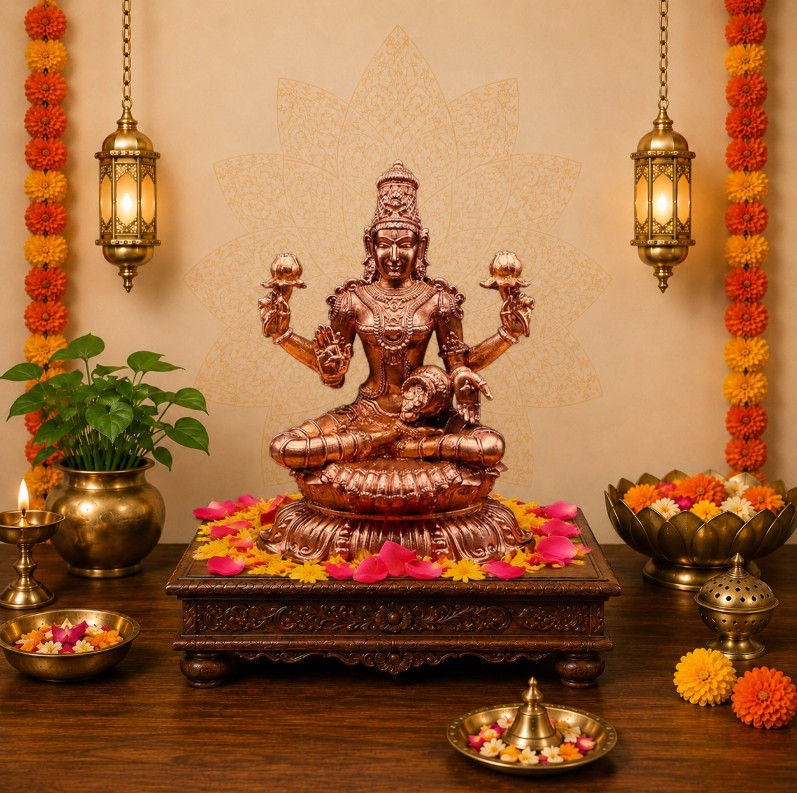
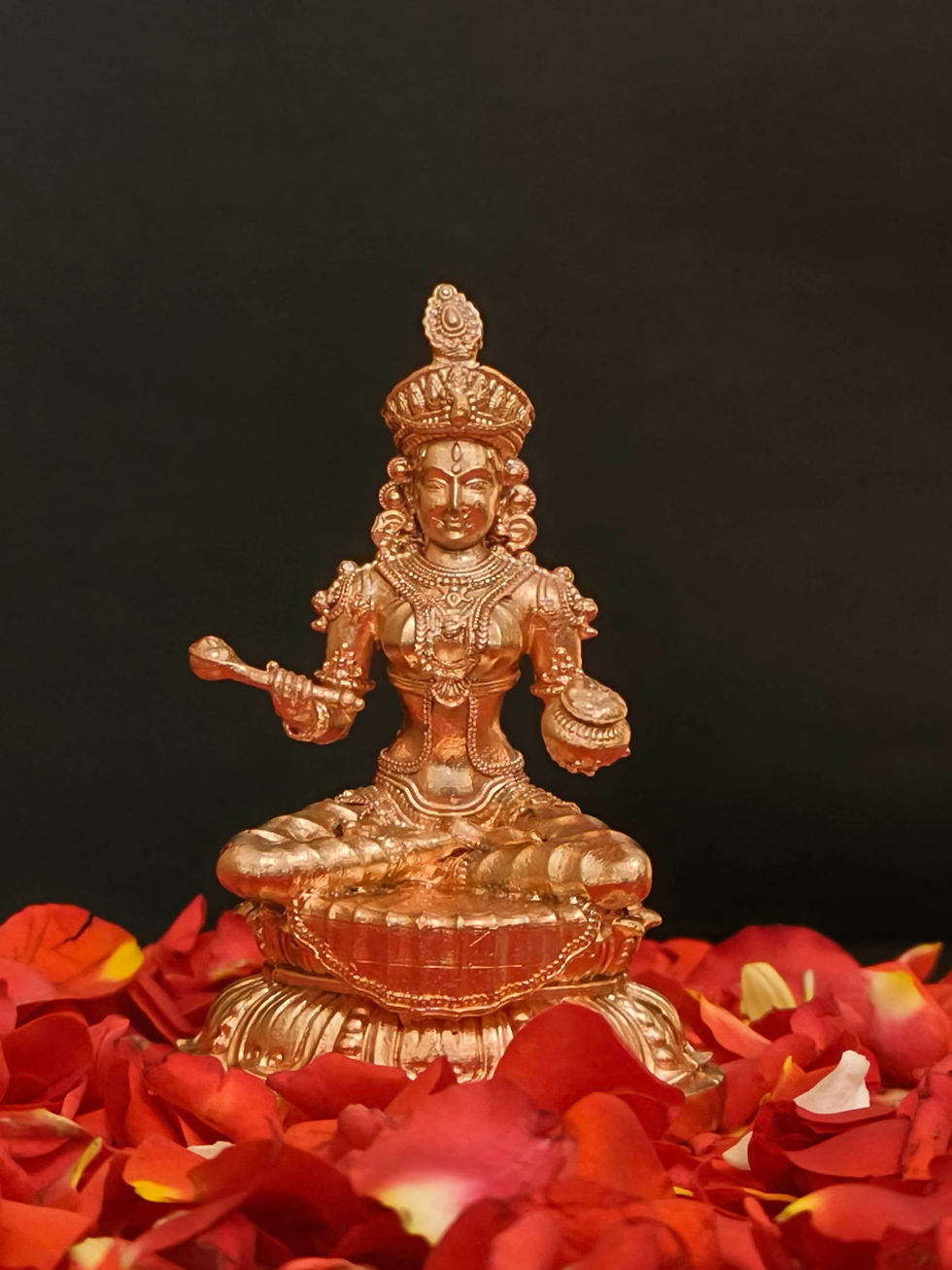
Every bronze idol carries a presence that goes beyond metal and mould
Fine detailing on each face, graceful postures, and expressive depth make them feel almost divine
Years of artisan skill and devotion go into every casting no two idols feel mechanical or lifeless
From a gentle hand raised in blessing to subtle emotion in the eyes, every element is sculpted with intention
Perfect for a puja room, meditation corner, or living space bringing warmth and spiritual presence into your home
Chola Style Idols – Blending Art, Faith and Antiquity
Rooted in the ancient techniques passed down through generations of skilled artisans, our Chola-style idols are more than just sculptures; they are a living connection to history. Every idol is handcrafted with meticulous care, following traditional proportions, postures, and iconography that have remained unchanged for centuries. This dedication to authenticity preserves the antiquity, symbolism, and spiritual significance of traditional South Indian temple art. Each idol tells a story of gods and goddesses, of devotion passed down through generations, and of an artistic legacy that continues to inspire. Owning one of these idols means owning a piece of living heritage.
Why Choose the Chola Style?
Chola-era bronze art (9th–13th century) is world-famous for its proportion, grace, and balance, a level of craftsmanship many still say has never been matched. At Idol Bronze, we've studied that same aesthetic tradition closely to craft Chola-inspired idols suited for today's puja rooms and home décor.
Popular Idols in Our Collection
Nataraja – The cosmic dance pose, encircled by the ring of fire (prabhavali), symbolising the balance of creation and energy.
Lakshmi Devi – The goddess of wealth and prosperity, available in both standing and seated poses on a lotus base.
Vinayagar – A favourite first idol for any puja room, available in multiple sizes.
Murugan – Featuring the vel (spear), with variations including the six-faced (Arumugam) form.
Shiva-Parvati, Krishna, Saraswathi – Crafted on custom order, following authentic Chola iconography.
Chola Inspired Idols for Puja and Decor
Drawing deep inspiration from the glorious Chola dynasty, an era celebrated for its unmatched mastery in bronze sculpture. Our idols reflect centuries of temple artistry and spiritual tradition. The Cholas perfected the lost-wax casting technique that continues to define South Indian bronze work even today, and our craftsmen honor that same process with unwavering discipline. Each piece is thoughtfully designed to serve both purposes as a sacred object of worship, radiating divine energy for daily rituals, and as an elegant décor piece that elevates the aesthetic of any interior. The balance of devotion and design makes every idol truly special, bridging the gap between ancient tradition and contemporary living.
Explore Our Collection of Bronze Idols
A curated collection, each bronze idol unique in form and rich in craftsmanship
Wide range of gods, sizes, and finishes for devotees, collectors, and art lovers
Every idol goes through a meticulous process: wax modeling, bronze casting, and hand-finishing
Ensures exceptional quality and lasting durability
Ideal as a puja centerpiece, a thoughtful gift, or a striking decor addition
This exquisite idol is available at Idol Bronze.
FAQs
What is the fifth element of Shiva?
The fifth element associated with Shiva in the Panchabhoota tradition is Earth (Prithvi). Ekambareswarar Temple in Kanchipuram represents the Earth element.
What does Ekambareswarar mean?
The name Ekambareswarar is associated with Lord Shiva worshipped at the sacred Ekambara tree and the temple's ancient traditions.
Which element does Ekambareswarar represent?
Ekambareswarar represents the Earth element, known as Prithvi in Sanskrit.
What is the connection between Parvati and Ekambareswarar Temple?
According to temple tradition, Goddess Parvati performed penance and worshipped Shiva at Kanchipuram, with the sacred mango tree playing an important role in the temple's story.
Why is the Earth element important in Shaivism?
Earth represents stability, strength, support, and the physical foundation of life, making it an important symbol in the Panchabhoota tradition.
What are the five Panchabhoota Sthalams of Shiva?
The five temples represent Earth, Water, Fire, Air, and Space, each expressing a different aspect of Shiva's cosmic presence.
What are Chola style bronze idols?
Chola style bronze idols are sculptures inspired by the classical South Indian bronze tradition known for graceful proportions, detailed ornaments, expressive features, and dynamic poses.
What is the connection between Ekambareswarar and Chola art?
Kanchipuram has a long history of South Indian temple art, and the Chola period played an important role in the development of temple architecture, sculpture, and bronze traditions.
Which Shiva forms are commonly made in Chola bronze style?
Popular forms include Nataraja, Somaskanda, Chandrasekhara, Dakshinamurthy, and other traditional forms of Shiva.
Can Ekambareswarar-inspired Shiva bronze idols be made?
Yes, a Shiva bronze idol can be designed in a traditional style inspired by the artistic heritage and iconography associated with South Indian temples.
Why is Kanchipuram important to Shiva devotees?
Kanchipuram is an important Shaiva pilgrimage centre and is especially significant because Ekambareswarar represents the Earth element among the Panchabhoota Sthalams.
What is the connection between temple heritage and Chola bronze art?
Both reflect the rich artistic and devotional traditions of South India, where sculpture, temple worship, craftsmanship, and religious storytelling developed together over centuries.
Why is Ekambareswarar important in the Panchabhoota tradition?
Ekambareswarar is important because the temple represents Earth (Prithvi), symbolising stability and the grounding aspect of Shiva's cosmic presence.

Comments